Return on Investment for Wellness Real Estate in Dubai

Investors often struggle to find stable commercial yields that outpace the volatility of speculative residential flips. This article explores how to achieve a superior return on investment for wellness real estate in Dubai by targeting institutional-grade assets with long-term operator leases. You will learn how to secure durable dollarized income and capitalize on the 21 percent annual growth within the UAE wellness economy.
Key Takeaways
- High growth potential. Investors achieve a superior return on investment for wellness real estate in Dubai as the sector benefits from a 21% annual growth rate in the UAE.
- Expanding market valuation. The wellness real estate market in the UAE grew to a value of $14.6 billion in 2025 from $3.3 billion in 2017.
- Significant rental premiums. Specialized assets command higher rental prices than generic spaces because the total UAE wellness economy is now valued at $40.8 billion.
- Strategic sector clustering. Integrated destinations in areas like Al Quoz reduce vacancy risks by matching floorplate configurations with the specific operational needs of fitness and health brands.
- Institutional income security. Wellness-led commercial property generates dollarized income through long-term operator leases that act as a hedge against inflation.
Understanding the Wellness Premium in Dubai Commercial Assets
What type of real estate has the highest ROI?
Institutional-grade commercial assets in high-conviction sectors, particularly wellness real estate, currently offer superior return on investment for wellness real estate in Dubai. This sector benefits from a 21% annual growth rate in the UAE. By focusing on sector-specific clustering and long-term operator leases, these assets outperform generic retail and residential spaces through higher rental premiums and sustained occupancy.
International investors increasingly target these specialized assets because they provide a hedge against inflation through dollarized income. Unlike speculative residential flips, wellness-led commercial property generates value through operational excellence and long-term tenant commitment.
How does tenant coordination impact long-term yields?
Tenant coordination ensures that commercial spaces are purpose-built for the operational needs of high-growth wellness and fitness brands. This strategy reduces capital expenditure by minimizing post-lease modifications and encourages operator stickiness. At destinations like Dubai Creative Park, matching asset design with tenant requirements secures durable, dollarized income streams and reduces the vacancy risks common in generic developments.
The transition from passive property management to active, managed destinations is redefining how capital performs in the UAE market.
- Resilient Asset Class. Wellness real estate has evolved from a niche sub-sector into a core driver of commercial resilience. The UAE wellness economy is now valued at $40.8 billion, creating a structural demand floor that protects against broader market volatility and maintains valuation floors.
- Operator-Led Stability. Operators of recovery clinics, fitness centers, and healthy F&B concepts prioritize long-term stability and specific floorplate configurations. These tenants exhibit lower churn rates because their business models rely on established local communities and specialized infrastructure provided by GulfALTS.
- Managed Destination Yields. Shifting from fragmented retail units to integrated, managed destinations creates more attractive cash flows for institutional investors. Clustering wellness brands generates footfall cross-traffic, allowing assets to command significant rental premiums over unmanaged, standalone commercial spaces in Al Quoz district.
- Health-Centric Corporate Mandates. Global corporate occupiers now prioritize business districts that integrate physical activity and mental wellbeing into the workplace environment. This shift in demand ensures that wellness-led projects like Dubai Creative Park remain highly competitive for blue-chip tenants seeking to fulfill employee wellness mandates.
Key Drivers of Wellness Real Estate Performance in the UAE

Is it smart to invest in real estate in Dubai?
Investing in Dubai real estate is a strategic move for capital seeking dollarized income and high-growth demographics. The market benefits from a 21% annual growth rate in the wellness sector and a rapidly expanding expatriate population. This creates a durable demand floor for institutional-grade commercial assets over speculative residential options.
The UAE’s wellness real estate market grew from $3.3 billion in 2017 to $14.6 billion in 2025, recording the second-highest growth rate globally.
Strategic location in established creative and commercial hubs like Al Quoz minimizes development risk. GulfALTS prioritizes these high-conviction zones to accelerate occupancy and secure blue-chip tenants. This proximity to urban centers ensures a permanent audience for fitness and health services.
What is the best real estate investment in Dubai for stability?
The most stable real estate investments in Dubai are niche commercial assets in established hubs like Al Quoz. These properties achieve stability through long-term operator leases and specialized build quality that limits tenant churn. Purpose-built districts like Dubai Creative Park offer higher yield consistency than saturated residential segments.
Institutional discipline in asset management preserves value over a 15 year horizon. GulfALTS applies an operator-led mindset to ensure maintenance standards remain high. This focus on long-life assets protects the net operating income for all stakeholders.
While residential markets often face saturation, wellness-led commercial space commands a significant premium. This makes it an ideal vehicle for long-term wealth preservation.
Dubai Creative Park: A Case Study in Wellness-Led ROI
Why category-defining destinations outperform generic space
Category-defining destinations outperform generic space by concentrating specialized operators to create high-intent footfall and cross-brand loyalty. GulfALTS develops these assets to capture the global shift toward wellness real estate, which reached $876 billion in 2025. This clustering strategy ensures higher tenant retention and superior yield resilience compared to fragmented commercial developments.
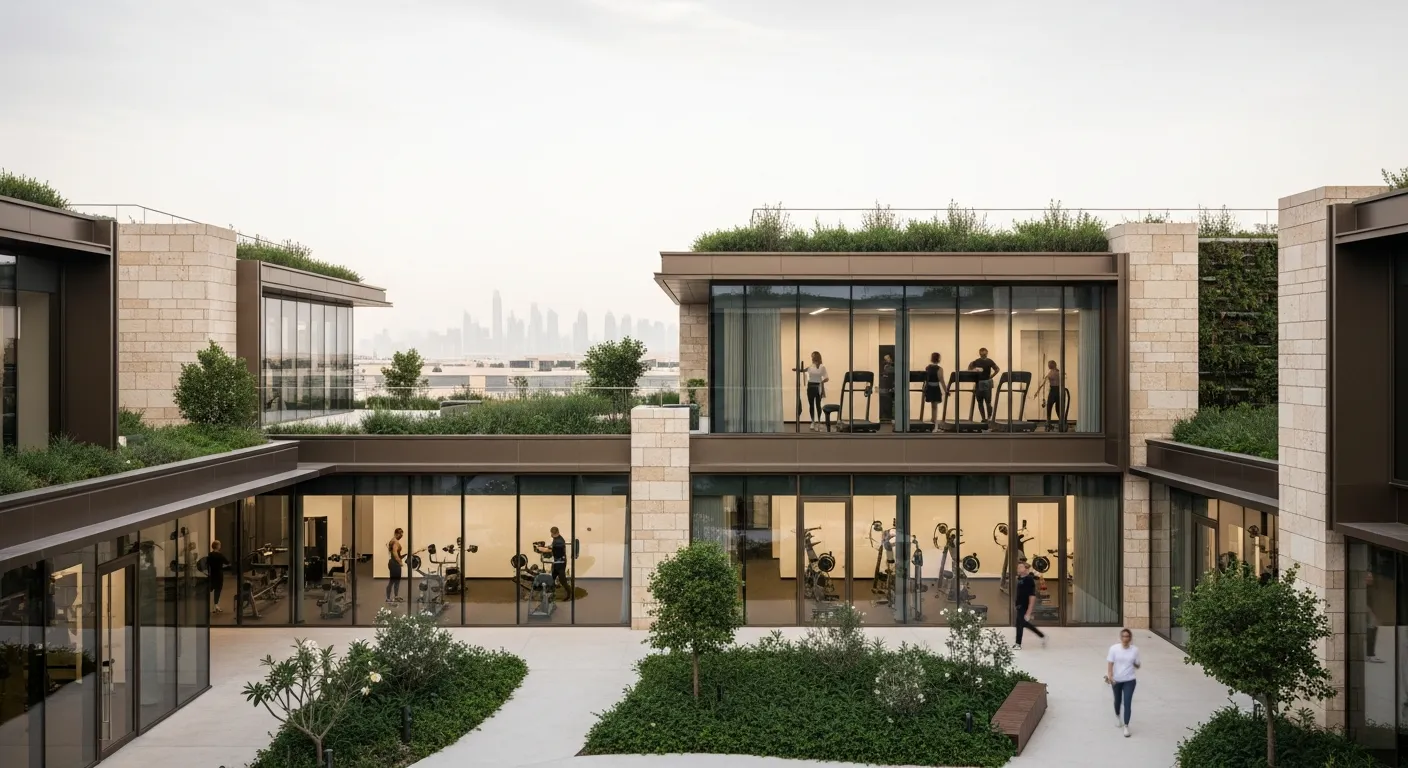
Dubai Creative Park serves as a 500,000 sq ft model for this approach in Al Quoz district. By providing a dedicated environment for fitness and recovery brands, the district generates consistent brand convergence that generic office buildings cannot replicate. This scale allows GulfALTS to manage the ecosystem as a single product, ensuring every operator benefits from a targeted, health-conscious audience.
Integrating wellness into the broader GulfALTS portfolio
GulfALTS applies a disciplined operator-led mindset to ensure facilities meet the precise technical requirements of international wellness brands. This focus on build quality reduces long-term maintenance costs and matches with global corporate mandates for employee wellbeing. Institutional underwriting standards guide every design choice, from biophilic elements to specialized infrastructure for high-performance recovery clinics.
Future-proofing these assets involves designing for scalability so tenants can grow within the district as demand increases. This structural flexibility prevents tenant churn and secures the long-term productivity of capital across the portfolio. By prioritizing long-term coordination over short-term leases, GulfALTS creates durable, dollarized income streams that are highly attractive to global institutional investors.




.svg)